How Northumberland Park residents reclaimed the story of race and child poverty

The Story
WHO DEFINES POVERTY?
Race, Ethnicity and Child Poverty in Northumberland Park is a collaboration between Place Matters, Just Knowledge and Roots & Rigour.
Working with residents of one of England’s most deprived neighbourhoods, the project set out to understand child poverty not as an abstract problem, but as a lived reality shaped by race, place and power. By centring community interpretation alongside quantitative data, the work challenged who gets to make sense of poverty, and what becomes visible when those most affected are treated as analysts rather than subjects.
The Challenge
WHY NOW?
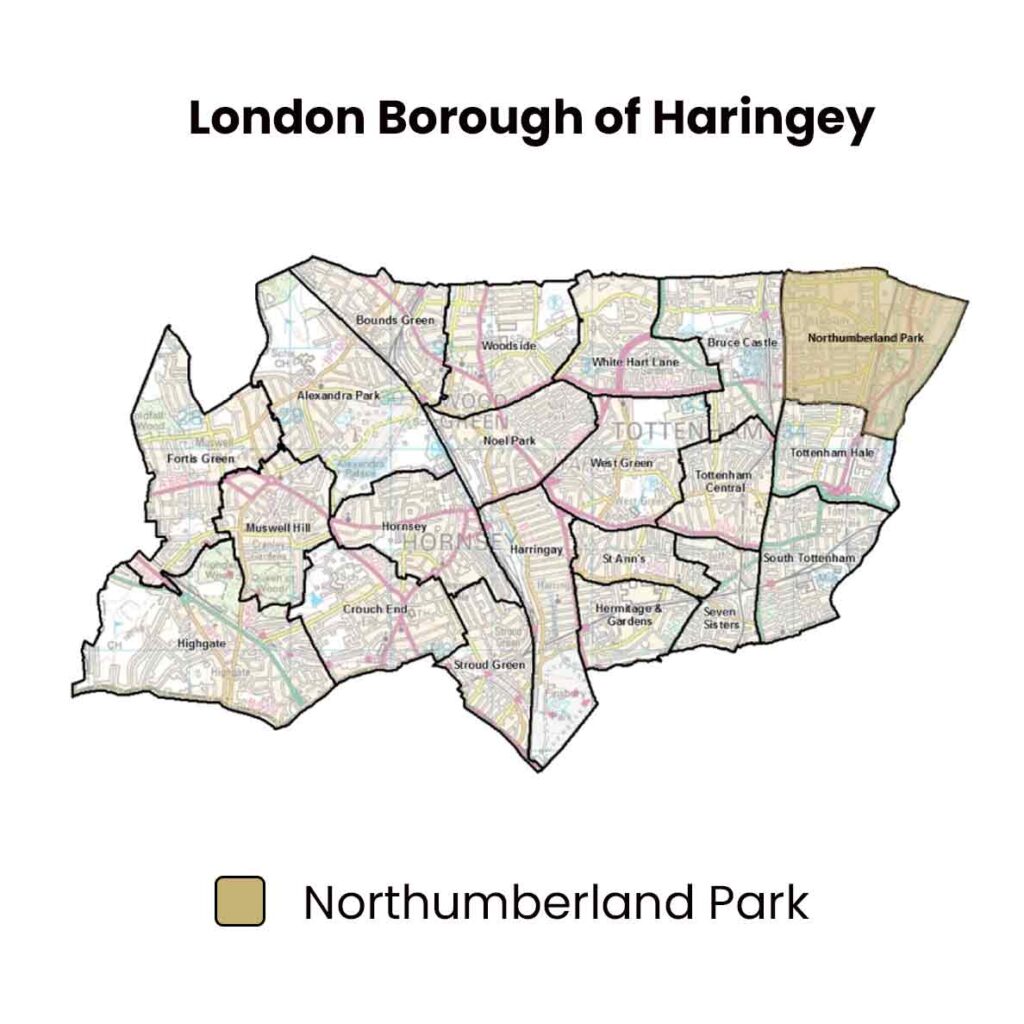
Northumberland Park is one of the most deprived neighbourhoods in England. The data is clear. It shows high levels of child poverty, stark differences in outcomes by ethnicity, insecure housing, and the uneven effects of regeneration. What it does not show is how these realities are experienced, understood, or explained by the families living with them.
Existing data on child poverty was extensive, but it left little room for residents’ own interpretations of what drives poverty in their neighbourhood, or what they believe needs to change.
So the team asked a different question:
What do families in Northumberland Park see when they look at the data – and what becomes possible when they interpret it for themselves?





The Solution
WHAT WE DID
Working together, Place Matters, Just Knowledge and Roots & Rigour designed a data democracy approach: a community-led process that combined statistical evidence with lived experience, collective sense-making and narrative insight.
Over six community data workshops, the partnership:
Shared and Interpreted Hyper-Local Data
Residents examined data on child poverty, ethnicity, income, school exclusions, housing conditions, benefits, and local deprivation indices (IMD/IDACI). Through maps, charts and open discussion, residents connected the numbers to the specific realities of Northumberland Park, interpreted patterns including:
- the concentration of low income and overcrowded housing across the estate,
- exclusion rates shaped by racialised discipline practices,
- the mismatch between regeneration narratives and local benefit,
how ethnicity, migration histories and family structure intersect with child poverty, - the invisibility of certain forms of work, caring and survival that never appear in official datasets.
Connected Data to Lived Reality
Through facilitated conversation, creative methods and narrative reflection, residents described the realities behind the data:
- food banks becoming a long-term necessity, not an emergency measure,
- insecure temporary accommodation and constant moves disrupting stability,
- the emotional and administrative burden of navigating Council systems,
- the Tottenham Hotspur Stadium as a symbol of wealth “passing through” and extracting from the area rather than improving it.
Generated New Questions, Theories and Insights
Participants identified missing data and generated new theories for the Just Knowledge team to investigate. Their insights shaped new datasets, presentations and analysis.
Co-Authored Public Knowledge
Through interviews, observation and thematic analysis, Roots & Rigour brought participants’ experiences into focus, highlighting the realities of racialised harm, the labour of community leadership, and the conditions required for Black-led systems change around the issue of safety, and in relation to funding and power.
The process concluded with a national webinar attended by more than 400 people and a digital dataset openly published on GitHub for wider use.
The Impact
A narrative shift
The project reframed child poverty in Northumberland Park as the predictable outcome of political decisions, economic extraction and racialised neglect, not as an individual or cultural deficit.
01
A challenge to institutional epistemology
By placing community interpretation alongside quantitative analysis, the work demonstrated that knowledge production itself is a site of power, showing how easily official data can obscure structural harm.
02
A template for ethical, political, community-led data work
The methodology informed internal conversations within JRF, Place Matters and Just Knowledge about how future programmes should approach race, place and poverty. It illustrated the value of Black-led, justice-oriented research that refuses to separate numbers from narrative, analysis from accountability.
03
Strengthened community agency
Residents were repositioned as analysts and experts. For most, it was the first time their interpretations had shaped a public conversation about their neighbourhood.
04
A new community-led methodology
The work demonstrated how a data democracy approach can transform technical evidence into relational, political, community-grounded knowledge.
05
Shifted understanding of child poverty
The work demonstrated how a data democracy approach can transform technical evidence into relational, political, community-grounded knowledge.
06
A model for future place-based work
The collaboration between the North London Partnership Consortium (Place Matters), Just Knowledge and Roots & Rigour seeded new methodologies and strengthened a multi-organisation partnership working at the intersection of research, policy and community voice.
07
Roots & Rigour helped us see what the data alone could not show. Their ability to draw out story, lived experience and political clarity gave the project its depth – and ensured that residents’ voices weren’t an ‘add-on’, but the centre of the work.

Project Lead
just knowledge
Resources

Report
Read the full report: Understanding Poverty in Place: Where Data Meets Community in Northumberland Park

Webinar
Understanding Poverty in Place: Where Data Meets Community
Blog
Poverty, Place, and Power in Northumberland Park by Dr Celestin Okoroji

Article
From Food Banks to Football Stadiums: Where Data Meets Reality by Dr Jolyon Miles-Wilson and Darius Corrigall

Essay
‘I See Oliver Twist Everywhere’: Stories, Data and Power by Dr Tamanda Walker

Blog Series
Substack blog series on child poverty in Northumberland Park
Data repository
Explore the project data and analysis files hosted on GitHub.